
Q: Annie – Do I need to worry about caramel color in say Diet Coke? If not, is the caramel color in food a concern?
A: Alisa – In terms of dairy, probably not.
Anything with caramel in its title may sound like a red flag for milk, butter or cream. But caramel color is typically derived from corn syrup and occasionally from potatoes, wheat, or other carbohydrate sources. While lactose (milk sugar) is a permitted carbohydrate in the production of caramel color, it is rarely used.
Also, as mandated by the FALCPA (Food Allergen Labeling and Consumer Protection Act) if the caramel color in a food is derived from milk, then it should be stated clearly on the label. This is typically done with either a notation next to the ingredient stating that it contains or is derived from milk or in the “Contains” statement at the end of the ingredient listing. Of course, food allergen labeling isn’t perfect, even with this law in place. Always double check with the manufacturer on the source of their caramel color, especially if a severe or life-threatening milk allergy is your concern.
For further information on milk-based ingredients, see our Dairy Ingredient List.
Other Concerns About Caramel Color
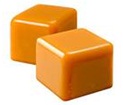 But whether or not you need to worry about caramel color in general, is a completely different issue. In February 2011, The Center for Science in the Public Interest (CSPI) filed a petition calling for a ban on the caramel coloring used in Coca-Cola, Pepsi, and other foods. According to CSPI:
“In contrast to the caramel one might make at home by melting sugar in a saucepan, the artificial brown coloring in colas and some other products is made by reacting sugars with ammonia and sulfites under high pressure and temperatures. Chemical reactions result in the formation of 2-methylimidazole and 4 methylimidazole, which in government-conducted studies caused lung, liver, or thyroid cancer or leukemia in laboratory mice or rats.
The National Toxicology Program, the division of the National Institute of Environmental Health Sciences that conducted the animal studies, said that there is “clear evidence” that both 2-MI and 4-MI are animal carcinogens. Chemicals that cause cancer in animals are considered to pose cancer threats to humans. Researchers at the University of California, Davis, found significant levels of 4-MI in five brands of cola.”
Alisa Fleming is the founder of GoDairyFree.org and author of Go Dairy Free: The Guide and Cookbook for Milk Allergies, Lactose Intolerance, and Casein-Free Living. If you have a relevant question for Alisa, email us. Need Go Dairy Free now? Order the E-Book for immediate delivery or download it to your Kindle.

4 Comments
I am less than 3 months into knowing I have a dairy/milk allergy.
I am trying to be as informed and educated as possible, and find myself overwhelmed frequently.
Today I went out and about with my mom and son. I double, triple, extra checked my lunch choice, and hovered like a weirdo to make sure everything was safe for me. I enjoyed my sandwich with no issues. We rode the tiny train, and played on the playground.
On our way to the car, we passed the restaurant again, and went in to use the bathroom and refill.
We chose sweetened green tea. The ingredients did not indicate anything about milk, and didn’t even have a disclaimer of “might come in contact with allergens…..)
On the drive home. I had to stop to take benadryl. I very rarely react to the point of needing benadryl immediately, yet it happened today.
After online research, I learned that that brand of brewed green tea has caramel color listed as an ingredient.
Your statement that milk is rarely found in caramel color is dangerous, and misleading.
Ms. Williams – I hope that you are feeling better today! Did you contact the company to verify that their caramel color is milk derived? What brand is it? I’m not misleading at all. It is rarely derived from milk. Please note that potential cross-contamination of dairy in a restaurant setting (shared knife not fully cleaned, work surface not fully cleaned, etc) would typically yield a higher amount of milk protein than caramel color, even if derived from milk. Caramel color is made from carbohydrates / sugars. If milk were used, it would be lactose, not milk protein. While this does not mean it would be safe for someone with a highly sensitive milk allergy, it is still removed down the production chain.
And it seems you failed to read the note that I have included right within the article – “Always double check with the manufacturer on the source of their caramel color, especially if a severe or life-threatening milk allergy is your concern.” My article does not state that it is never a concern, but that you will find most caramel color used in food is not derived from milk. I just state the facts! I’m not giving you medical or dietary advice. Only your physician can do that.
This is so important for the public consumer to know! Thank you for shedding light on the matter!
I’m here to help 🙂