
 Q: Liz – I am interested in making my own dairy free yogurt, but am not sure what “starter” to get. Also, I would prefer not to use soymilk, but rather almond/ rice or coconut milk … any recipe ideas?
A: Alisa – First, it is important to understand what a “starter” is. Starter culture itself is merely bacteria. It doesn’t contain ingredients such as milk. However, the bacteria must be grown on a medium, and that medium is often dairy. For most dairy-free or dairy-low consumers, this will not be a problem, since the bacteria or starter is completely removed from the medium before use. Nonetheless, if you are dealing with a severe milk allergy, have any concerns about trace dairy, or are strictly vegan and want to ensure there was no dairy used in the making of the product, look for a dairy-free or vegan label, and then contact the company to verify their processes.
Some may wonder, “Why even add the starter?” Starter culture is what gives yogurt its characteristic tang, and those friendly bacteria known as probiotics. While you can make a mock yogurt using something tart and acidic such as lemon juice, it won’t contain a good dose of that healthy bacterium.
Now, there are three things that are commonly used as a starter for homemade yogurt:
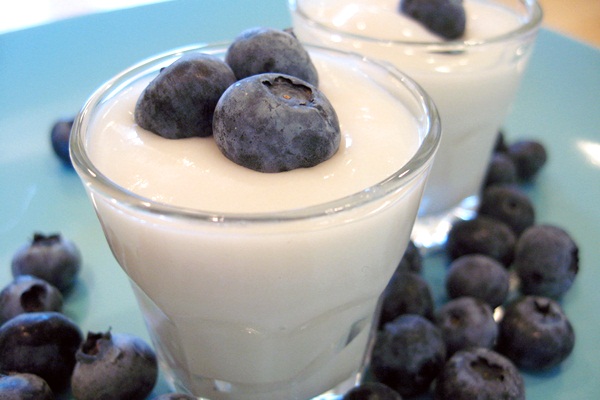
1) Another Yogurt – You can actually use a finished yogurt as the starter for your next batch. If you’ve never made yogurt before, a store-bought version will also work. There are many brands of dairy-free yogurt currently on the market, including ones made from coconut milk, nuts, oats, soy, and rice. Though these can be expensive, you only need one to get your first batch on the go. From there, you can simply save a little bit of yogurt from your first batch and use it as a starter for the next. This concept works well, even if you do your first batch with one of the other two starter options …
2) Starter Culture – You can actually purchase yogurt starters. Ther-Biotic (from Klaire Labs) and Custom Probiotics are touted as dairy-free. Ther-Biotic is the brand I use; you can read about their hypoallergenic policy here (they reportedly do not use dairy media to create their probiotics). Of course, always check with the manufacturer to ensure ingredients or processes have not changed.
3) Probiotic Capsules – Many brands of probiotics come in capsule form. To use as a starter culture, simply open the capsules and pour the contents into your yogurt. Again, probiotics are simply bacteria, and removed from their “host,” which may be milk-based. Nonetheless, where dairy is a strong concern, make sure to look for brands labeled as “dairy-free” or “vegan” and double check with the manufacturer on their processes.
You can technically use any milk alternative to make yogurt, not just soymilk, but the results will vary. Some won’t thicken as well as others. To compensate, some recipes use thickeners like agar flakes, gelatin (not appropriate for vegans/vegetarians), or starches. Also, higher fat “milks” (such as coconut milk) will produce a creamier end result. To note, homemade yogurt typically differs a bit from store-bought, but making it from scratch does allow you to tweak your yogurt to taste. Finally, if at first you don’t succeed, definitely try again. Very few people have complete success on their first batch of yogurt. It takes a bit of practice to get it right, but once you do, the financial and edible rewards are great.
For dairy-free yogurt recipes to work from:
- I have recipes for Soy Yogurt, Coconut Yogurt, and Cashew Yogurt in Go Dairy Free: The Guide and Cookbook.
- My friend Kelly has a great recipe posted for Cashew Milk Yogurt (pictured above) that uses probiotic capsules and offers a good guideline for how many you will need.
- The wonderful Cybele Pascal outlines how to make Sunflower Seed Yogurt using homemade seed milk and a dairy-free probiotic capsule.
- Living Without Magazine offers a recipe for Coconut Milk Yogurt using a starter culture.
Alisa Fleming is the founder of GoDairyFree.org and author of Go Dairy Free: The Guide and Cookbook for Milk Allergies, Lactose Intolerance, and Casein-Free Living. In addition to her own dairy-free lifestyle, Alisa has experience in catering to the needs of various special diets, including gluten-free, soy-free, egg-free, vegan, and multiple food allergies.
Need Go Dairy Free now? Order the E-Book for immediate delivery or download it to your Kindle or iPad.

61 Comments
Thanks for a really great and informative post. Do you know if it’s okay to make coconut milk using soy yoghurt as a starter? Soy yoghurt is the only vegan yoghurt I can get my hands on, and I don’t want to buy a whole bottle of probiotics if I don’t have to as I won’t have any other use for them. Thanks again for a wonderful blog post 🙂
Yes, you definitely can Thomas! The soy starter should work well and might even add a nice complimentary underlying flavor and a touch of protein.
Fantastic to hear, thank you so much for your reply! Will try this tomorrow and let you know how it goes. Keep up the great work on the blog!
Thank you. Happy to help and I hope it works out well for you!
@alisa can I use teczymes for vegan yogurt
Those sound like enzymes. Enzymes break down foods for easier digestion. Yogurt starters are bacterial cultures which help proliferate probiotics. Enzymes won’t work in this way.
Hello! I would like to know if it’s possible to use cow milk yogurt as a starter in a soy milk, to get soy yogurt. will it ferment? Thank you
Yes, it should. It will contain dairy though (the dairy doesn’t alter when it ferments). As long as you are okay with a dairy-soy yogurt, then it should work fine.
How many capsules of probiotic per half gallon of milk?
That will vary by the brand/type. Usually, the recipes call for about 30 billion probiotics per batch.
I haven’t seen this used in any of the vegan cashew yogurt recipes, but I have used my sour dough starter to make this yogurt. I guessed at the amount because I couldn’t find any recipes calling for the sour dough starter. It turned out great, albeit very sour, but thick and creamy. I will try again with slightly less sourdough starter. 3C cashews, 2 1/2C water and 1/4C sourdough starter. Instapot yogurt setting for 18H.
Very cool! Thanks for sharing this Nancy.
Love the adventuresomeness of this … and that it worked!
Thanks.
Starting my first batch! Curious – if all works as planned, how much of this batch would I need if I wanted to use this yogurt as the starter for my next batch?
I think just about 1/4 cup.
HI Alisa, I was a wondering if a kefir culture would be the same as a yogurt culture? I’ve made kefir before and have cultures in my fridge but it’s a watery consistency than yogurt. I do have a thickener that I e not used yet, would that be the best way to get yogurt? Thanks in advance.
I really haven’t made kefir so I couldn’t tell you for sure Tasha. Here is what I could find on the difference – http://www.culturesforhealth.com/learn/milk-kefir/difference-between-kefir-yogurt/
if using a dairy yogurt to culture a batch of (mostly) non-dairy yogurt, how do I do the culturing?
Follow your recipe and use it as you would the starter culture Ruth – add it to the batch and culture away!
Hi Ms. Alisa!
I would like to ask if I can use dairy yogurt as starter for the soy yogurt that I will do. Non-dairy yogurt is not commonly found here in my country. Thank you in advance! 🙂
Yes, if dairy isn’t a serious health issue for you, then you can use dairy yogurt as a starter for making your own soy yogurt. It will certainly be diluted in your end product, too.
Hi Alisa,
How many capsules would you use? There are some with 50 billion live cultures and some with only 1 billion. I have a bottle in my fridge (acidophilus, 1 billion per capsule). I don’t know how many to use for say 1 liter of soy milk. Any advice would be appreciated.
Thanks!
Olena
It’s really up to you on how many you want to add per batch. I usually do around 10 billion live and active cultures.
Hi,
I tried making vegan yoghurt (oat) but used dairy culture as starter as I wanted the tart flavor which is found in dairy yoghurt that I love. It worked the first time but after that I could not get the tart flavor. Do I need to let it sit out for longer to get the tart flavor. I personally don’t like much of the commercial vegan yoghurts cause they never give me the tart flavor of dairy yoghurt.
Regards
Nisha
Hi Nisha, dairy milk does tend to sour more than a plant-based milk would, which is why it tends to be more tart in flavor. Though it can be hard to get this tartness through culturing alone, you can add some lemon juice to add that contrast you are looking for.
Hi,
I believe you may have covered this above but I just want to clarify. I would like to start making almond or coconut yoghurt, however, I currently have dairy (I am not vegan). Can I use the dairy yoghurt as a starter culture for the non-dairy yoghurt?
Regards,
Anna
Yes, you can.
Thanks this is really helpful! Off to find a vegan probiotic powder I go! Have you ever tried making coconut yoghurt from homemade coconut milk (from fresh coconuts, not dried?)
I haven’t, but I’m sure it would work great!
Van, the reason they say that you must use a non-dairy grown probiotic when making vegan yoghurt is that it won’t be considered vegan otherwise – there is no effect on the end result whether the bacteria was grown on dairy or anything else.
Almond yoghurt is known to be the hardest to make. The ideal temperature for fermenting most yoghurts is about 40 Centigrade, if I remember correctly. Unless it’s the summer and you live in a hot place, ambient temperature will not be enough to thicken yoghurt at home. This is especially true for almond yoghurt, which is the most difficult to thicken. You might need to buy a yoghurt maker.
Also, certain bacteria are better for making yoghurt than others. The bacteria in probiotics tablets are for health, not necessarily yoghurt making. Hope this helps 🙂
Hi Alisa, is it true that if making vegan yogurt (using almond milk) one must use a non dairy probiotic?
I made 2 batches of almond milk yogurt using 2 capsules of megalife probiotics and neither has that sour taste, and i left the first batch to ferment for 8 hours & the second set for 11. Also I used organic store bought unsweetened almond milk… pacific is the brand i think. I didnt add sugar to milk either.
Would so love some advice. Thanks.
Hi Van, if you want it to be completely dairy-free / allergen-safe, then yes, it is best to use a dairy-free probiotic. In terms of how it would affect the results, I’ve never heard of this. However, non-dairy milk does not tend to sour as well as dairy milk.
I have a three year old sourdough starter. Do you think a tablespoon or so of that might ferment it?
I’m not sure! I’m really not an expert on sourdough starters. I know someone who might have an idea though and will ask her to comment if she knows.
Hi Sherise, I checked with a sourdough expert (they also make non-dairy yogurt at home) and it was a no go. They said some people add yogurt to their sourdough starter, but the reverse won’t work well.
I would like to make coconut yogurt in an electric yogurt maker. My machine heats and then automatically switches to cool after fermentation. My recipe says to ferment for 24 hours to ensure highest possible live cultures. I need to avoid dairy and soy and so think a probiotic capsule is the best starter for me.. Can you tell me how much probiotic to add? Can you also suggest which strains might work best? I have capsules ranging from 16 billion to 60 billion. Thanks!!
Hi Bonnie,
This post should help you – http://www.godairyfree.org/ask-alisa/ask-alisa-what-starter-can-i-use-to-make-dairy-free-yogurt-and-how-do-i-make-it
Also, I like this brand of probiotic – https://www.protherainc.com/prod/proddetail.asp?id=K-TCP
I am wanting to make coconut milk yogurt for my 12mo. but I don’t want to have to make it everyday, so how long will a batch last???
Hi Danielle,
I can’t confirm exactly, but it should last a week.
Just tried cashew milk yogurt in my yogurt maker…. Are you able to tell me why it’s so sour?
Perhaps too much starter or acid? Did you add sweetener?
I have a 9 month old baby that I breastfeed, I have recently discovered that she is dairy sensitive. I have been feeding her a baby yogurt daily and noticed that she has had terrible gas and not sleeping well. There really are no alternatives for babies in the market so I have thought of making yogurt from breastmilk. My question is how and what would I use to ensure that it is as dairy free as possible, nutritionally dense but not too harsh on her little tummy?
Hi Lea, I’m not sure what your actual question is. I would imagine that yogurt made from your breast milk would be as nutritionally complete as you an offer. You would simply need to follow a yogurt recipe using breast milk instead of cow milk. If you are not consuming dairy, then in theory, there wouldn’t be any dairy passed on to your child. I must disclaim that I am not a physician, and can’t advise on your child’s diet. I would consult your pediatrician about any nutritional concerns.
Do you have any recipes, websites or references you could point to for a yogurt made with rice milk? My son is allergic to diary, soy, seeds, legumes, peanut, tree nut and coconut. I used to buy him Riceria, but they closed down. I am really intimidated of the prospects of making yogurt, especially one with rice milk as I have not read positive things about making yogurt with rice milk. Thanks for being such a great resource!!
can you please post a bigger picture on your page so i can pin it to my pinterest board for future reference? thanks. 🙂
Bigger picture added for pinning!
Hi! I’m new to yogurt making and I seem to keep getting an egg smell and slight egg taste when my yogurt is done, I’m using Thai kitchen coconut milk, sugar Knox gelatin and bioK probiotic capsules. Any ideas why I’m getting this eggs smell and taste? Thanks 🙂
Heather
Hi Heather,
That doesn’t sound right. Perhaps all of the equipment you are using is not completely sterile?